Wallfacer is an autonomous engineering platform.
Full autonomy when you trust it. Full control when you don't.
curl -fsSL https://latere.ai/wallfacer/install.sh | shEvery AI coding tool today locks you into one interaction mode. Chat tools are fast but lose structure at scale. Spec-driven tools add discipline but slow you down on day one. Task boards help you coordinate but don't understand your architecture. Wallfacer connects all of these into a continuous workflow.
Adaptive abstraction
Chat for greenfield exploration, specs for complex systems, tasks for parallel execution, code for precise edits. Switch between levels as your project evolves.
Autonomy spectrum
Full autonomous loop (implement, test, commit, push) or intervene at any point. Dial autonomy per-task, per-spec, per-project.
Specs as the source of truth
Ideas don't become code directly. They become structured specs that AI can reason about, iterate on, and implement from. Specs are versioned and reviewable.
Per-task git worktrees
Each task works in its own git worktree for safe parallel execution. Multiple agents work simultaneously without stepping on each other.
Operator visibility
Real-time logs, traces, timelines, diff review, and usage/cost tracking. A full audit trail from idea to merged code.
Model flexibility
Works with Claude Code, Codex, and custom harness setups. Not locked to any single LLM provider.
Dial autonomy to the work
The same engine runs every mode. Slide between conversation and full automation without switching tools.
Ideas become structured, versioned specs. Iterate on the design in place, validate dependencies, and dispatch when ready.
You approve the design; agents draft it.
Explore
Describe what you want to build in a conversation. Wallfacer helps shape the idea.
Specify
Ideas become structured specs. Iterate until the design is right.
Execute
Specs decompose into tasks on a board. Agents implement, test, and commit in isolated git worktrees.
Ship
Reviewed changes merge automatically. Auto-commit, push, and build when ready.
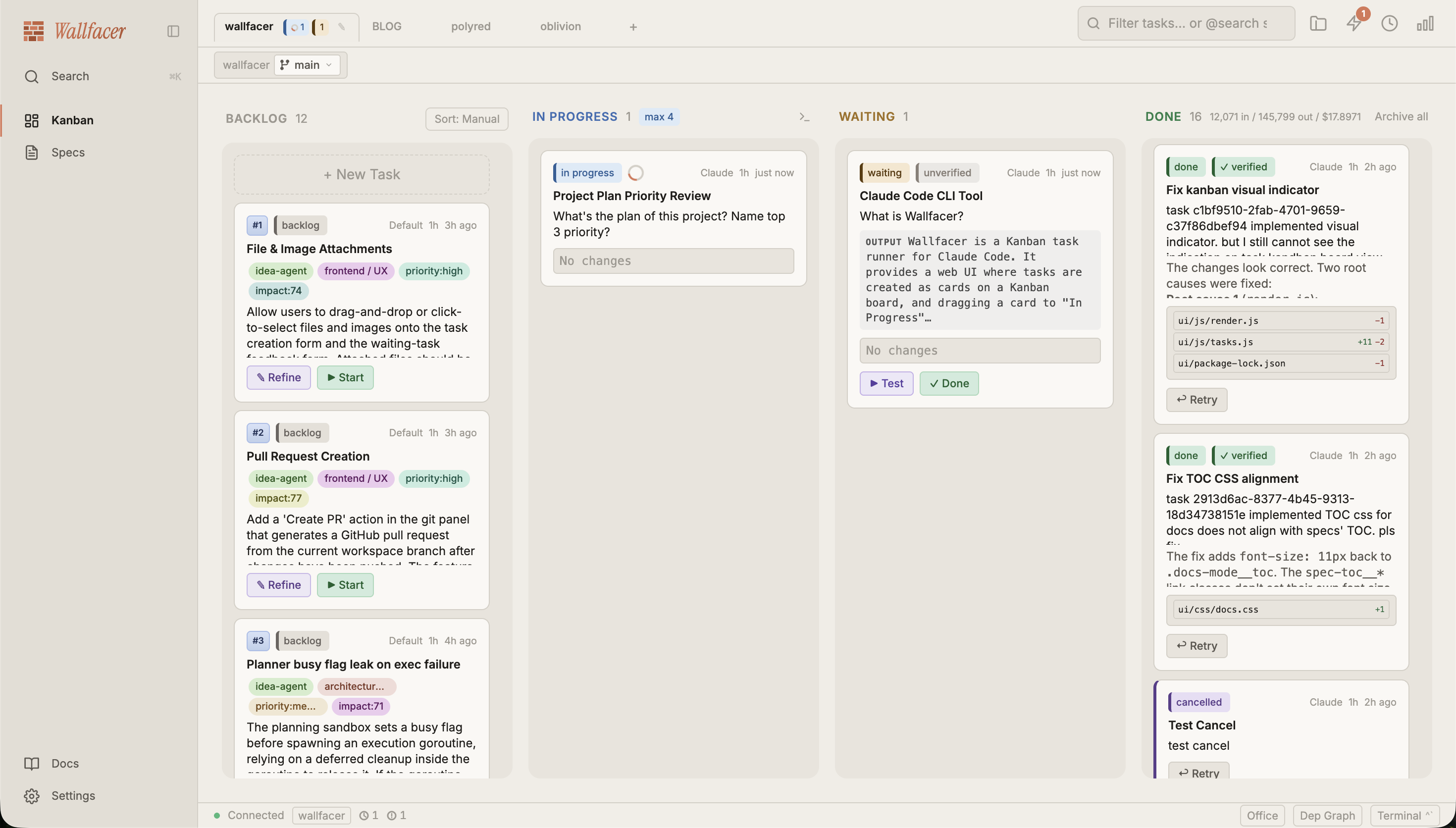
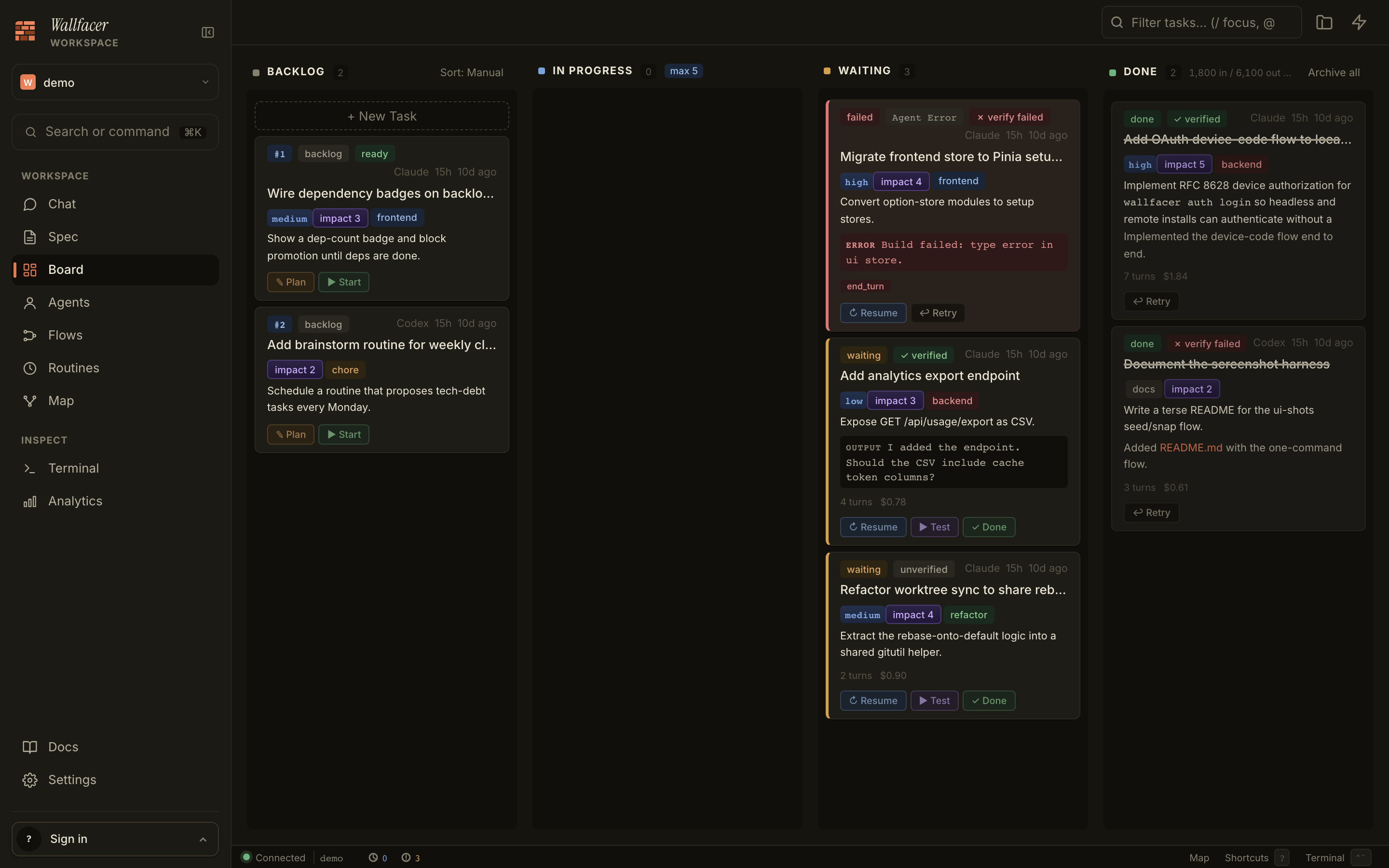
Task board: managed execution
Coordinate multiple AI tasks on a kanban board. Drag cards across lifecycle stages, bulk-create and link dependencies, refine prompts before execution, and let autoimplement promote backlog items as capacity frees. Each task runs as a host process in its own git worktree.
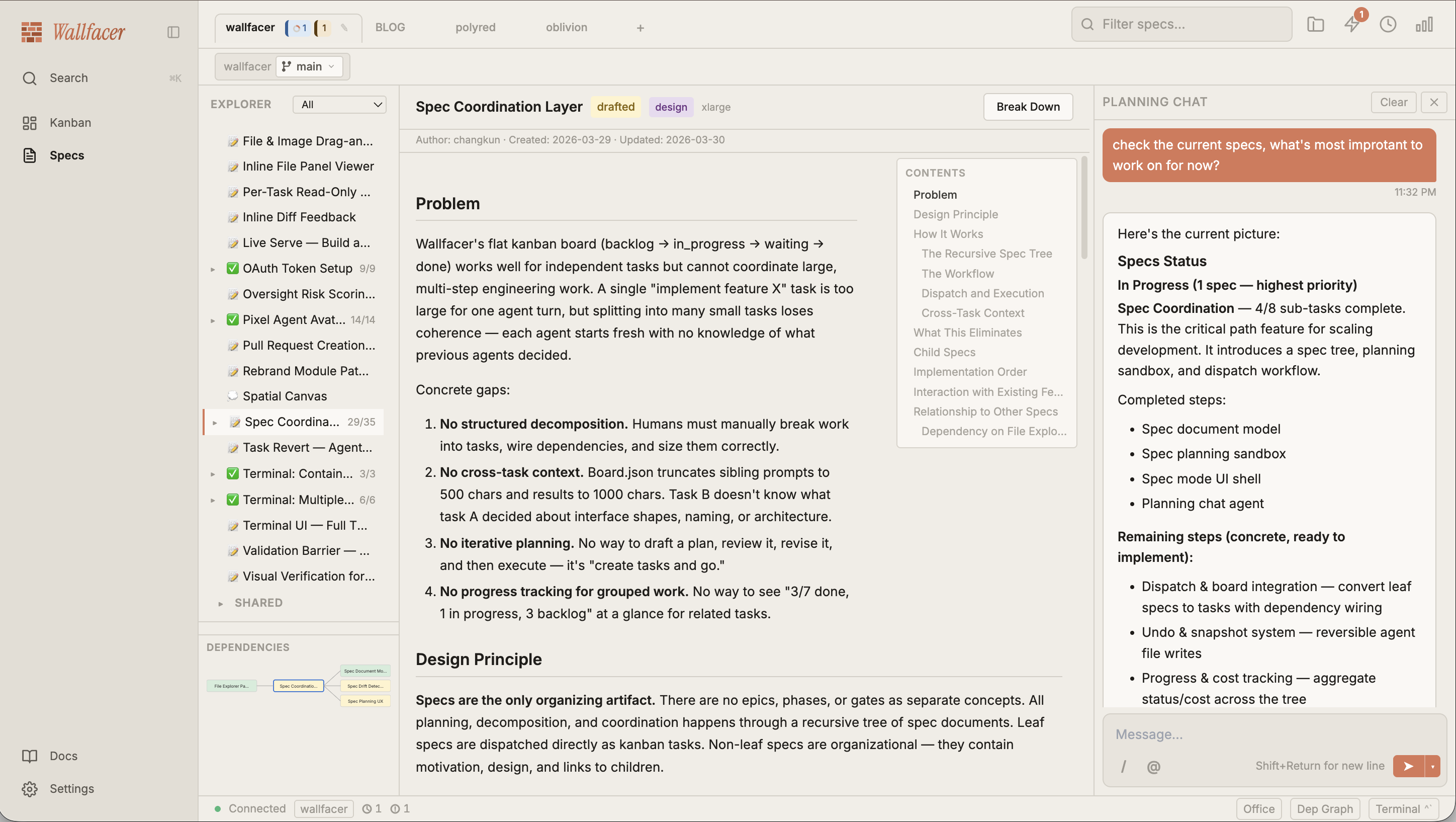
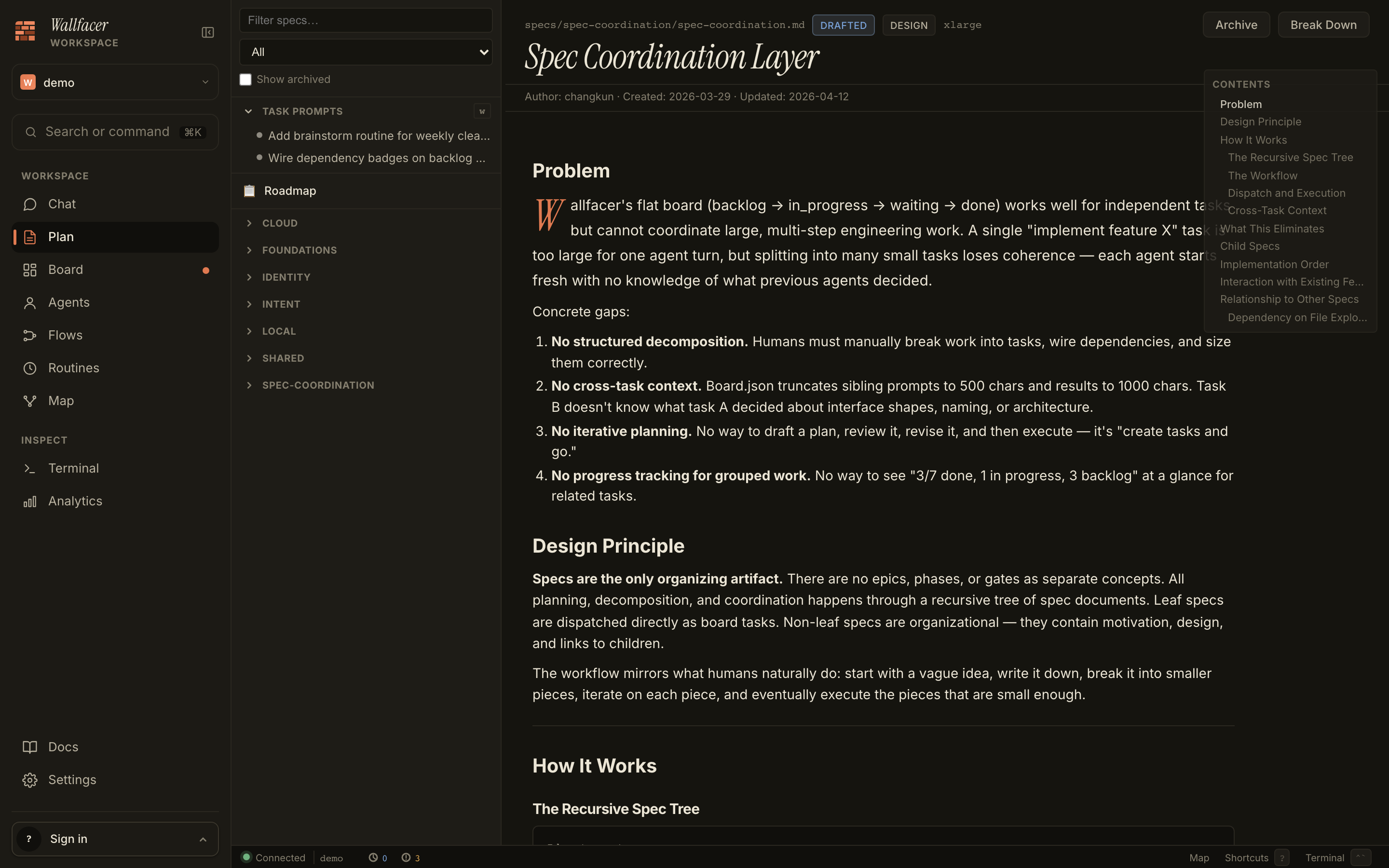
Spec mode: structured design
Design before you build. The three-panel spec view gives you an explorer tree, a focused Markdown view, and a planning conversation. Break big ideas into structured specs, validate dependencies, and dispatch leaf specs to the task board once the design is right.
Oversight: actionable audit trail
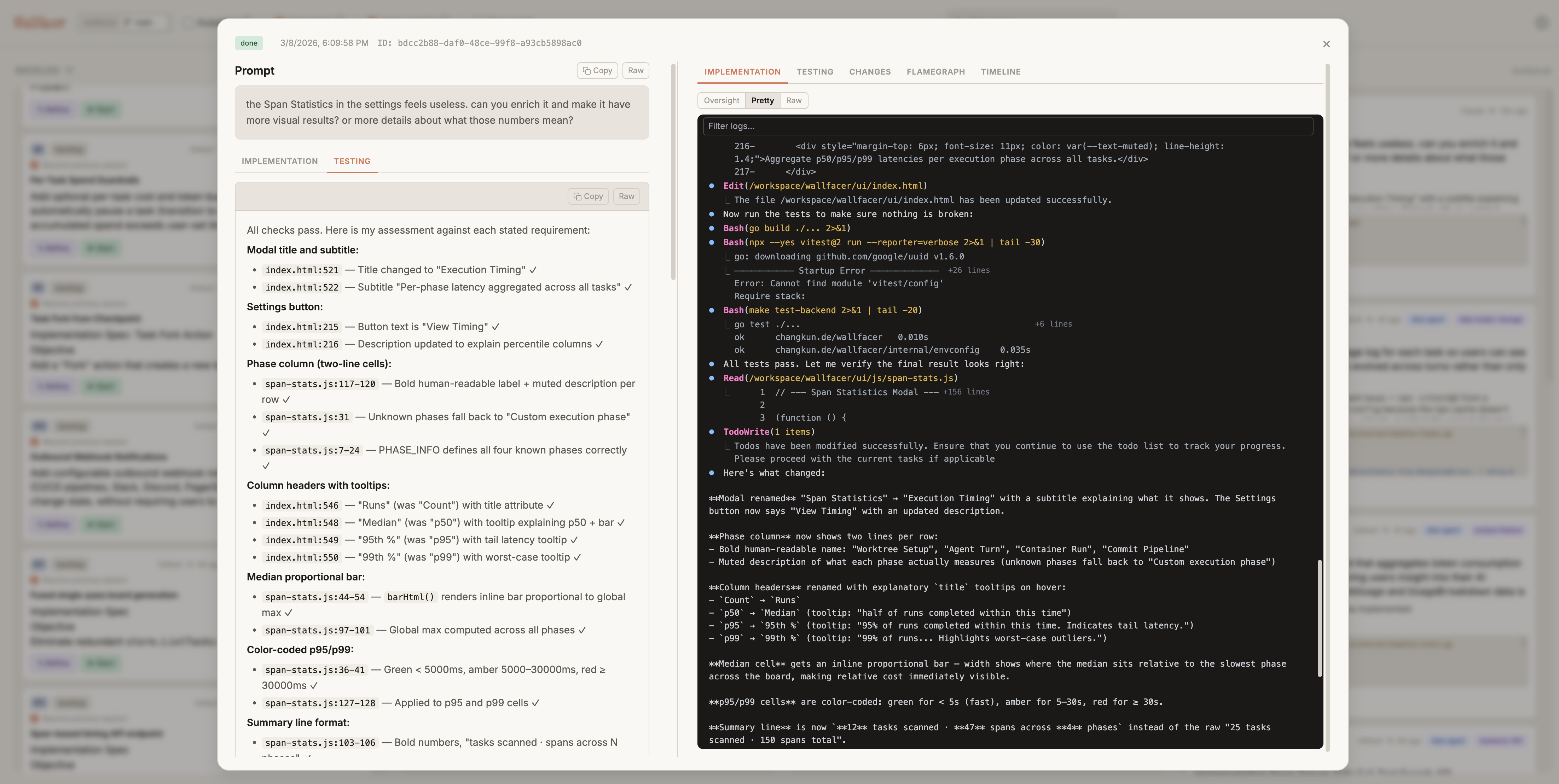
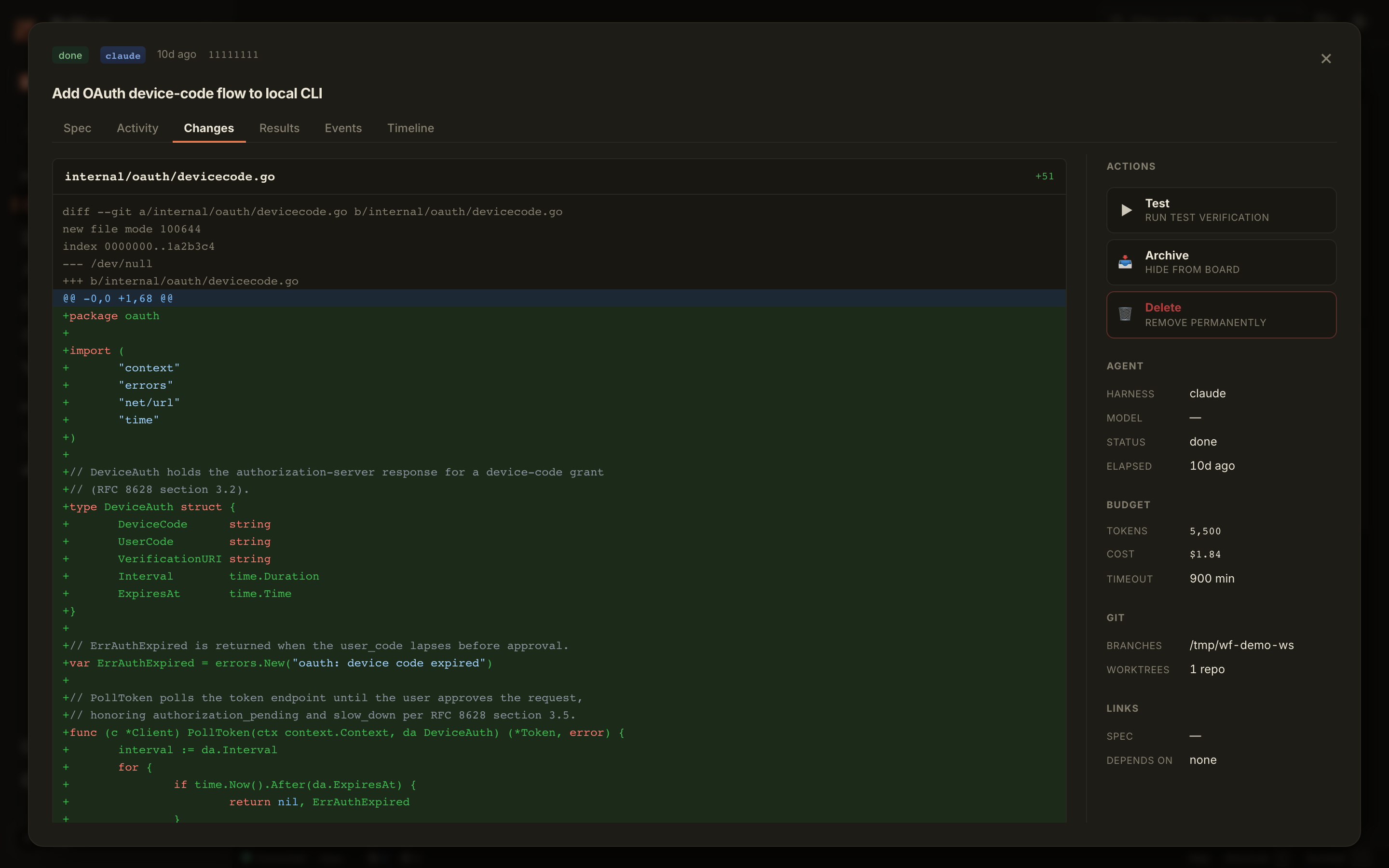
Before accepting any automated output, inspect what happened, when, and why. Each task produces a structured event timeline, a diff against the default branch, and an AI-generated oversight summary.
Cost & usage visibility
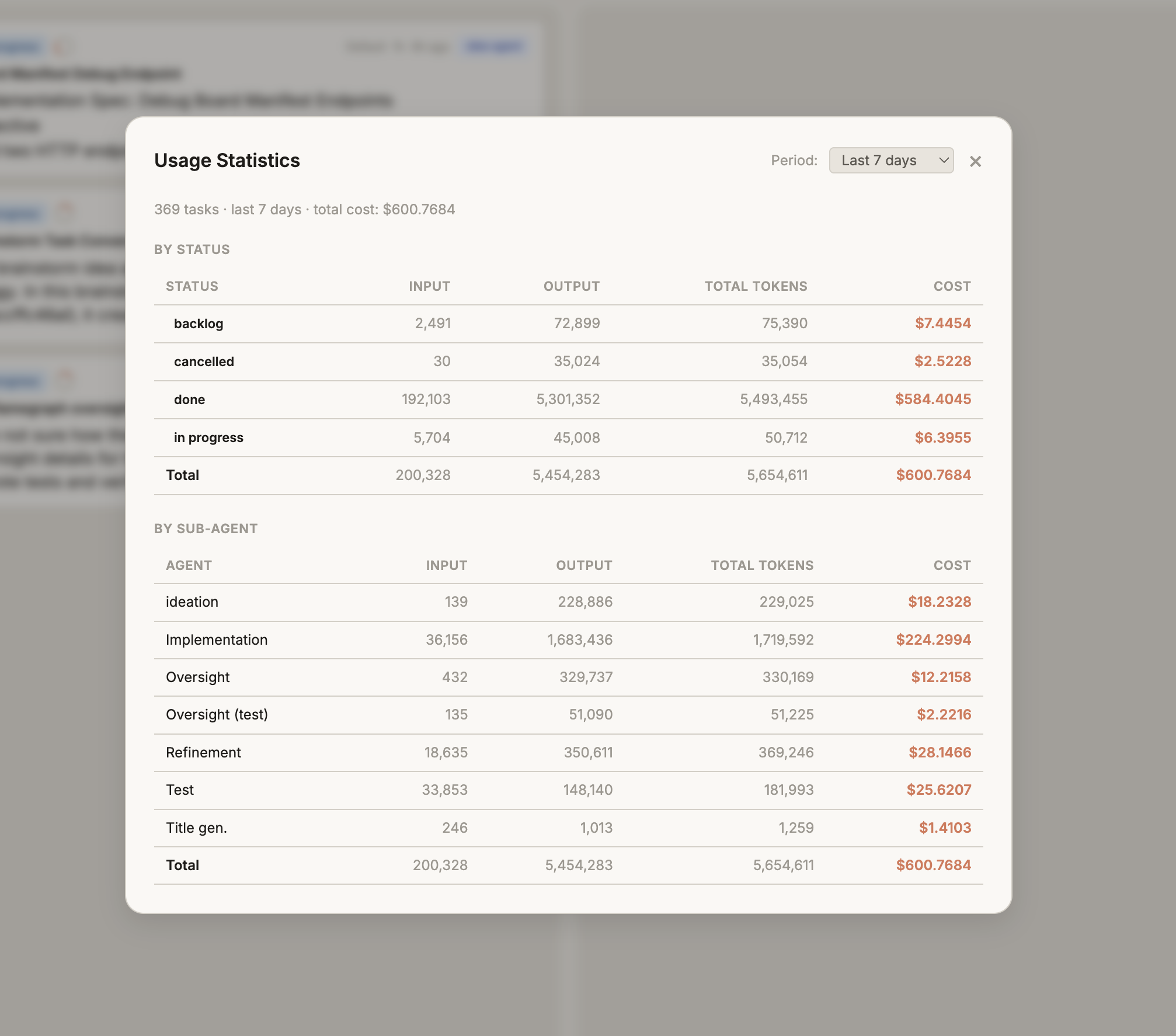
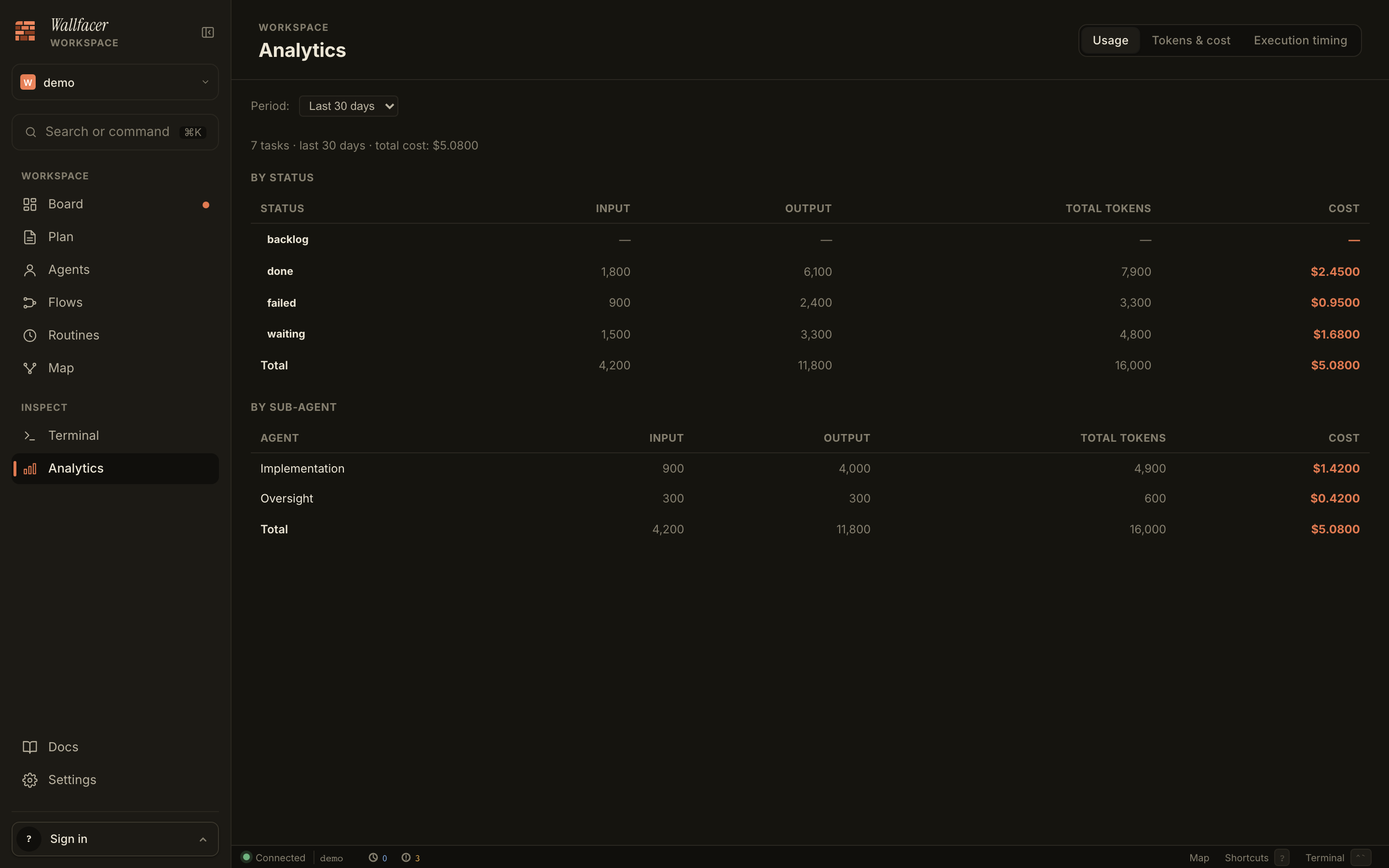
Track token usage and cost per task, activity, and turn, so cost stays visible as automation scales. Breakdowns by activity (implement, test, refine, oversight) show exactly where budget goes.
Bring your own coding agent
Wallfacer drives the agent CLI you already use through a pluggable harness layer. Pick one per task or pin different harnesses to different agent roles. Not locked to any single provider.
Execution engine
Host-process execution, per-task git worktrees, safe parallel runs, max-parallel caps, circuit breakers, worktree health restoration.
Autonomy loop
Prompt refinement, implementation, testing, auto-commit, autoimplement promotion, auto-retry, cost/token budgets, failure triage.
Spec workflow
Structured design specs, six-state lifecycle, dependency DAG, recursive progress tracking, planning-conversation AI with slash commands.
Oversight layer
Real-time logs, timelines, traces, diff review, usage/cost visibility, per-turn breakdowns, task search, oversight summaries.
Repo operations
Multi-workspace groups, branch switching, sync/rebase helpers, auto-commit and push, task forking.
Dev tools
File browser and editor, interactive host terminal, system prompt customization.